
“Success for us would be that, in ten years’ time, Navantia UK will be recognised as one of the companies Britain relies upon to deliver its naval and industrial capability.”

 Jorge Estévez-Bujez

Navantia UK was established in 2022. Three years later, the acquisition of Harland & Wolff’s four sites gave it an industrial presence in Belfast, Appledore, Methil and Arnish. It gave the company scale. Modernising those facilities will show what the company can do with it. Navantia UK aims to expand its work in defence, the maritime industry and energy, and to establish a lasting place in British shipbuilding. Derek Jones, the company’s Chief Commercial and Business Development Officer, answered DYS’s questions in writing.
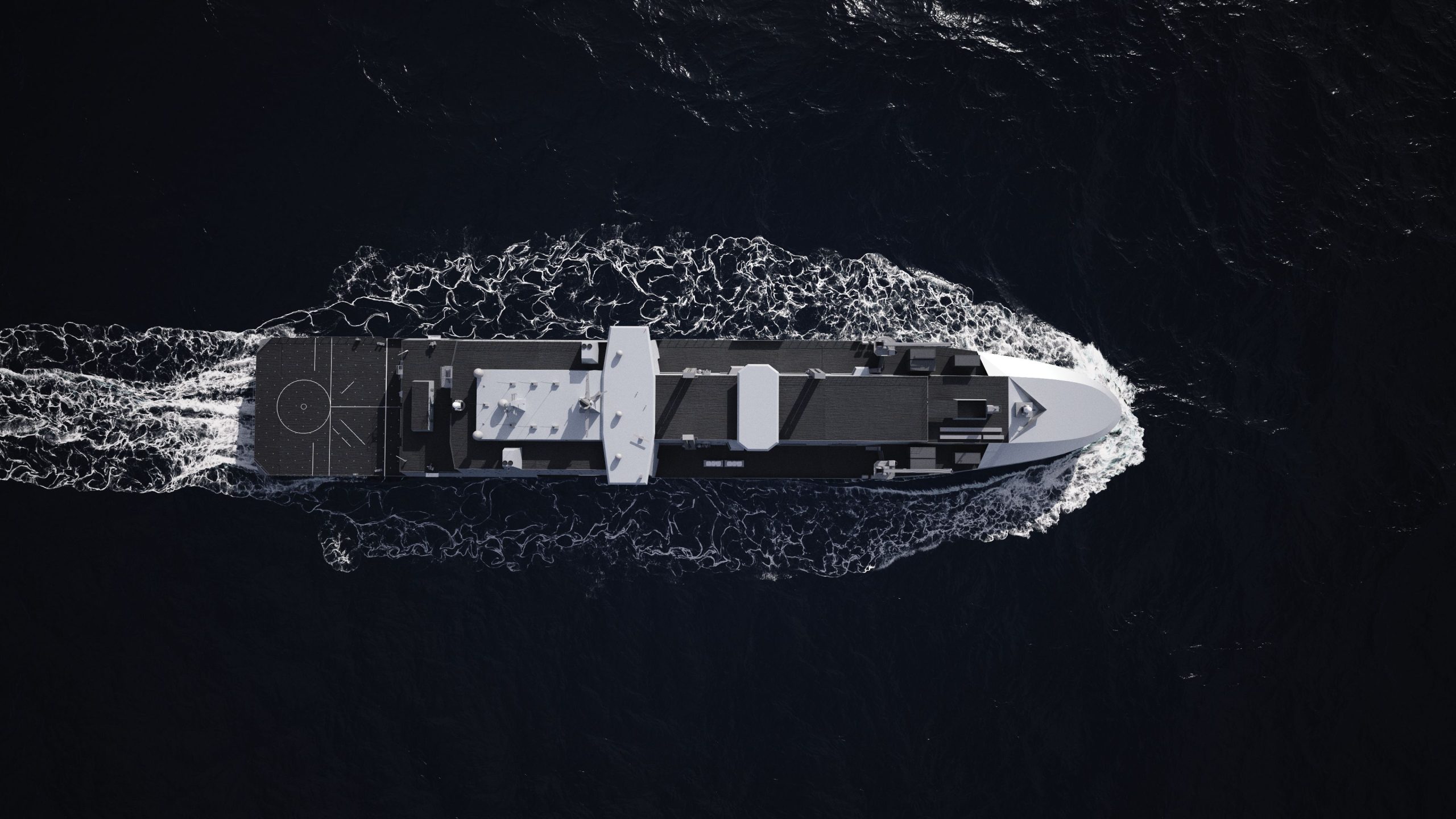
I. Fleet Solid Support: from contract to industrial reality
1. For several years, much of the discussion surrounding the Fleet Solid Support programme focused on contracts, workshare and industrial commitments. That phase is now beginning to recede. Steel is being cut, blocks are under construction, and the keel of RFA Resurgent has already been laid. At what point can Navantia UK say that FSS has moved beyond being primarily a programme in development and become a fully established naval shipbuilding production line?
Derek Jones: FSS has now moved into full-scale production. Steel has been cut, blocks are under construction, the keel of RFA Resurgent has been laid at Appledore, blocks have moved from the shopfloor to the drydock in Spain and preparations in Belfast are well advanced for the assembly, integration and delivery of all three vessels.
The programme is therefore no longer principally about design or preparing industrial capacity. It is now about building ships and the workforce, facilities, engineering processes, logistics and supply chain are now operating as part of a live naval shipbuilding programme.
FSS is creating lasting shipbuilding capability in the UK: the people, production disciplines, technology and supply chain needed not only to deliver RFA Resurgent and her sister ships, Reliant and Resourceful, but to compete for and execute future naval programmes.
2. FSS also represents an unusual test of distributed shipbuilding. Bow sections are being built at Appledore, a significant part of the construction is taking place in Spain, while final assembly, systems integration and testing will be carried out in Belfast. It is an industrial model that may look convincing on paper, but ultimately has to work in steel, tolerances, schedules and logistics. What is the greatest challenge in making three geographically separate production centres operate, in practice, as a single shipyard?
Derek Jones: When Navantia UK bought Harland & Wolff’s shipyards, it became clear that a significant level of investment was required to modernise facilities and build industrial capability. Our challenge has been to design a build strategy that delivers that investment while delivering ships on schedule to the Royal Fleet Auxiliary.
We are ensuring that three geographically separate production centres operate to a single engineering and production system. A block constructed at Appledore or in Spain must arrive in Belfast at precisely the right stage of production, manufactured to the same engineering definition and quality standard. Navantia has extensive experience of modular and distributed shipbuilding. FSS applies that model across the UK and Spain at significant scale. Success ultimately means making the physical distance between the yards almost irrelevant to the way in which the programme is managed.
“Success ultimately means making the physical distance between the yards almost irrelevant to the way in which the programme is managed.”
3. The Seahorse barge, built at Methil, might appear to be a relatively modest element alongside three large support ships, yet it is precisely what physically connects part of this distributed construction strategy. Is Seahorse simply a tool created for FSS, or should we see it as evidence that Navantia UK is already building an industrial system designed to endure beyond this programme?
Derek Jones: Seahorse was created to meet a very practical requirement of FSS: transporting major ship blocks between Appledore and Belfast. Its significance, however, is broader.
The barge’s construction at Methil demonstrates the industrial model Navantia UK is developing across its four sites. One UK facility has designed and delivered an asset that directly enables naval construction at two others. That’s an example of the yards operating as a joined up network rather than as isolated facilities.
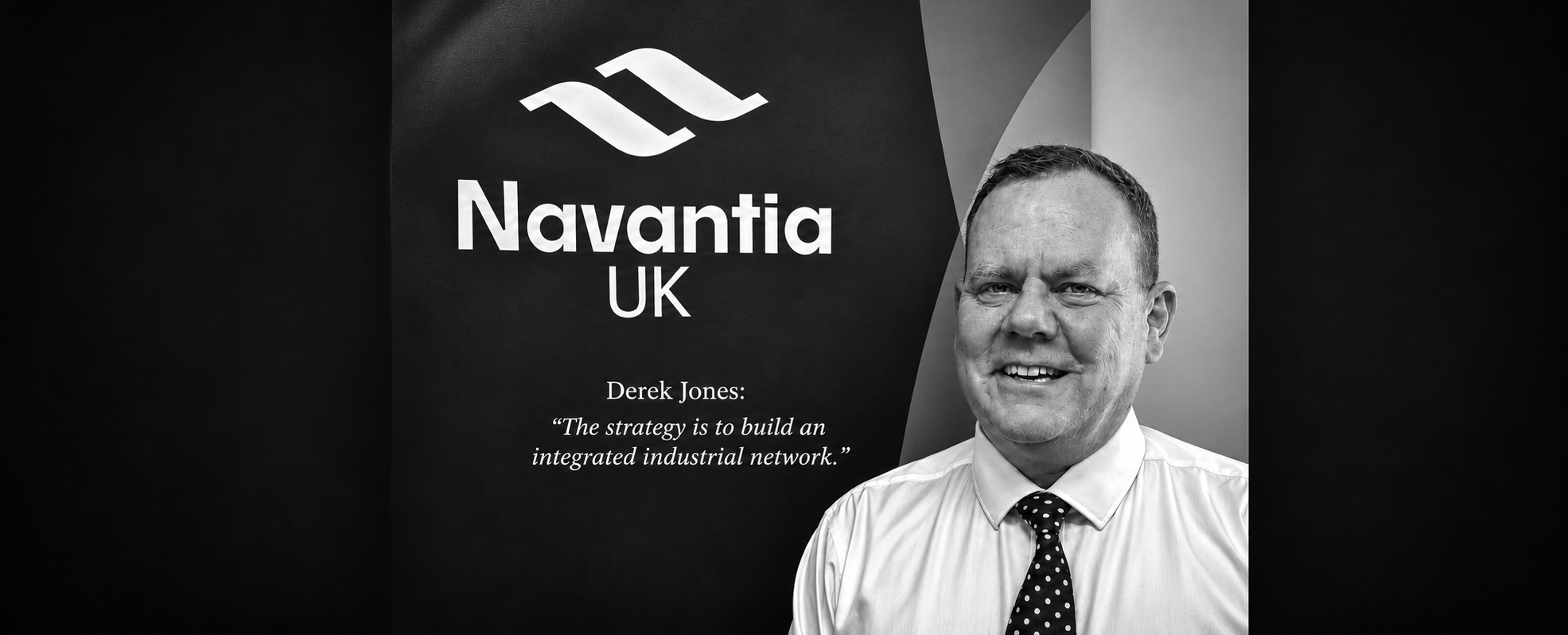
Derek Jones
The longer term value lies in the capability behind it: large-scale fabrication, modular construction, specialist maritime logistics and the ability to allocate work between sites according to their respective strengths and capacity.
FSS is the opportunity to set up and test that system. The intention is for the industrial capability to endure well beyond the delivery of the three ships.
II. Rebuilding an industrial base
4. Navantia did not acquire four pristine shipyards simply waiting for orders. It took over an industrial base with history, skilled workers and considerable potential, but one that had also been through a very difficult period. A little over a year later, Navantia UK is talking about investment, recruitment and major programmes. What has been the most difficult part of turning that inherited situation into a fully operational industrial organisation once again?
Derek Jones: The four yards came with extraordinary heritage, skilled employees and significant infrastructure, but they had also experienced a long period of uncertainty. Restoring the business involved investment in facilities and equipment alongside recruitment, workforce development, the rebuilding of supplier relationships and the introduction of new production processes, all the while continuing to deliver for customers.
Restarting physical infrastructure can be relatively straightforward. Re-establishing industrial momentum is more complex. Employees need confidence in the long-term future of the business, suppliers need confidence in the pipeline of work and customers need to see consistent delivery.
Our progress since the acquisition demonstrates how far that process has already advanced. Investment is being delivered across all four sites, recruitment and apprenticeships are expanding, production is under way on FSS and the yards are increasingly working together as part of one industrial organisation.
5. There is sometimes a tendency within the European defence industry to equate industrial investment with the purchase of new machinery. Yet a shipyard is, above all, about people, production discipline, engineering expertise, suppliers and the ability to deliver consistently on time and on cost. Of the £157 million committed by Navantia UK across its four sites, which investment do you believe will prove most decisive when the time comes to demonstrate that the company can deliver complex ships and structures on a sustained basis?
Derek Jones: No single machine or piece of equipment will determine the success of the recapitalisation programme. The most important result is the creation of a modern, joined up system across the UK shipyards.
Belfast’s transformation is the most significant. An expanded fabrication hall, an automated panel line, robotic cutting equipment, modern lifting capability and automated quality control will increase precision, productivity and safety while supporting a far more advanced manufacturing model.
Those assets are only part of the equation. They must be combined with skilled welders and fabricators, engineers, planners, quality teams, digital production tools and strong programme management.
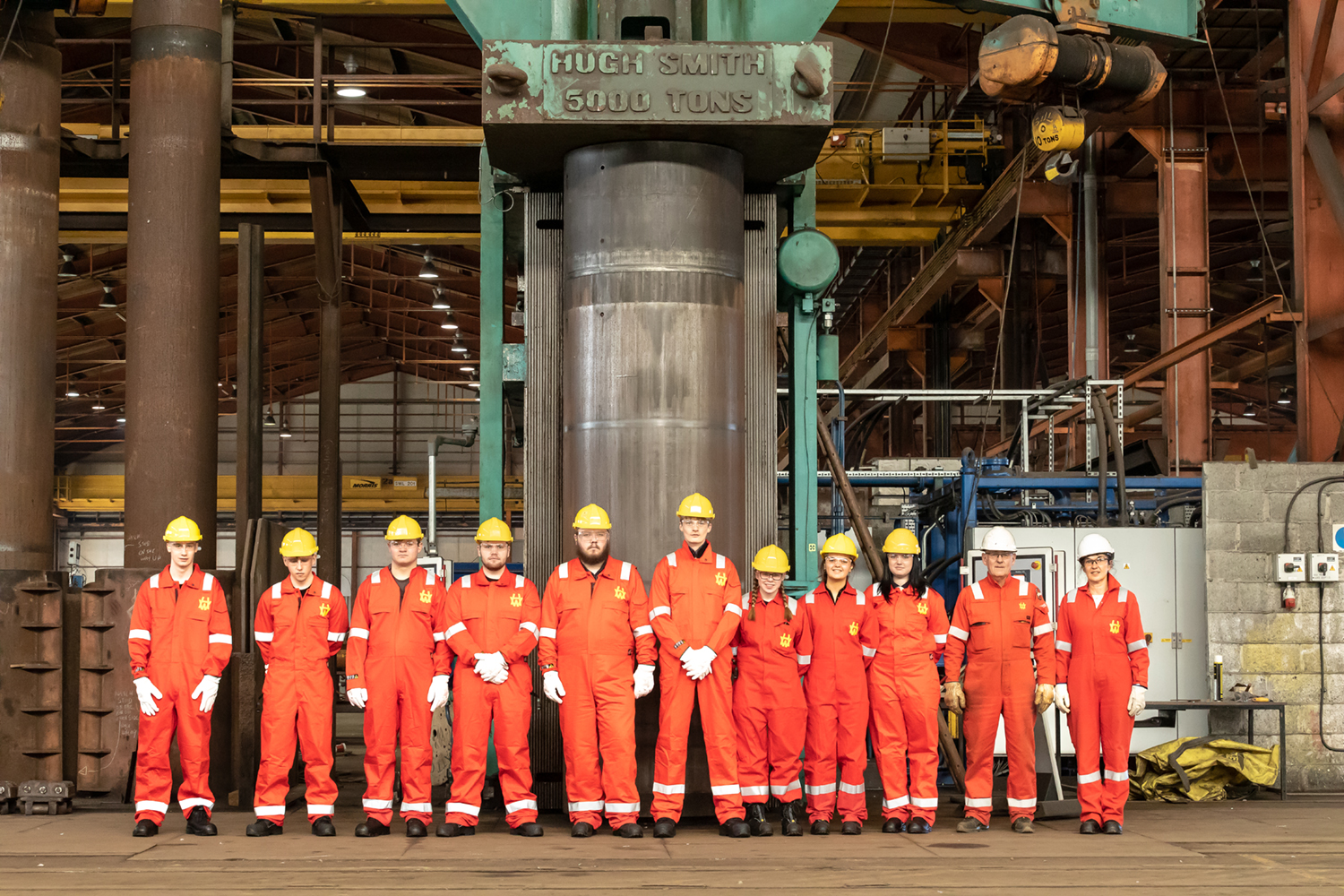
For that reason, investment in people is just as important as investment in infrastructure. Apprenticeships, recruitment, training and knowledge transfer are essential to ensuring that modern equipment translates into sustained industrial capability.
“For that reason, investment in people is just as important as investment in infrastructure.”
The ultimate measure of Navantia’s £157 million programme of investment across the four UK shipyards will be whether Navantia UK can deliver complex ships and structures repeatedly, to the required quality, schedule and cost. We are committed to doing so.
6. Belfast naturally attracts much of the attention because of its scale and its role in FSS. However, Appledore, Methil and Arnish may ultimately determine what Navantia UK is really building. Are we looking at a genuine integrated industrial network, or at one major shipyard supported by three secondary sites? What distinct role do you envisage for each of the four facilities over the coming decade?
Derek Jones: The strategy is to build an integrated industrial network.
Belfast is the largest site and will naturally remain central to major shipbuilding programmes. Its scale, dry docks and integration capability make it particularly suited to the construction, assembly, integration and support of large naval and commercial vessels.
Appledore is being developed as a specialist shipyard for construction of smaller vessels, including autonomous vessels.
Methil combines significant fabrication capability with maritime access. The yard has historically carried out a lot of offshore energy work but we are pivoting activity towards shipbuilding and defence.
Arnish brings specialist expertise in complex heavy fabrication, including subsea, offshore energy and other high-integrity structures.
All the yards are different, which provides strength. We see a credible pipeline for each of them and the ability to work together on the largest of programmes, as they are doing now on our export contracts.
7. The United Kingdom has lost a significant proportion of its shipbuilding capacity over recent decades and is now seeking to rebuild sovereign industrial capability at precisely the moment when naval demand is increasing. Can skills and productive capacity be regenerated quickly enough, or is the principal constraint facing British shipbuilding today no longer a lack of orders or funding, but rather people and the depth of the country’s industrial base?
Derek Jones: Skills and industrial depth are constraints facing UK shipbuilding, but they can be rebuilt if there is sufficient continuity of workload and investment.
It takes time though. Experienced welders, fabricators, naval architects, production managers and systems engineers cannot be created overnight. That is why a credible long-term programme pipeline is so important. It gives companies the confidence to invest and gives individuals the confidence to choose shipbuilding as a long-term career.
Navantia UK is addressing that challenge through a combination of experienced recruitment, apprenticeships, training and knowledge transfer across the wider Navantia Group.
The UK retains considerable maritime and engineering expertise. The challenge is rebuilding depth and ensuring continuity.
That requires government and industry to avoid repeating the historic cycle in which industrial capability is rebuilt for an individual programme and then allowed to decline once that programme concludes.
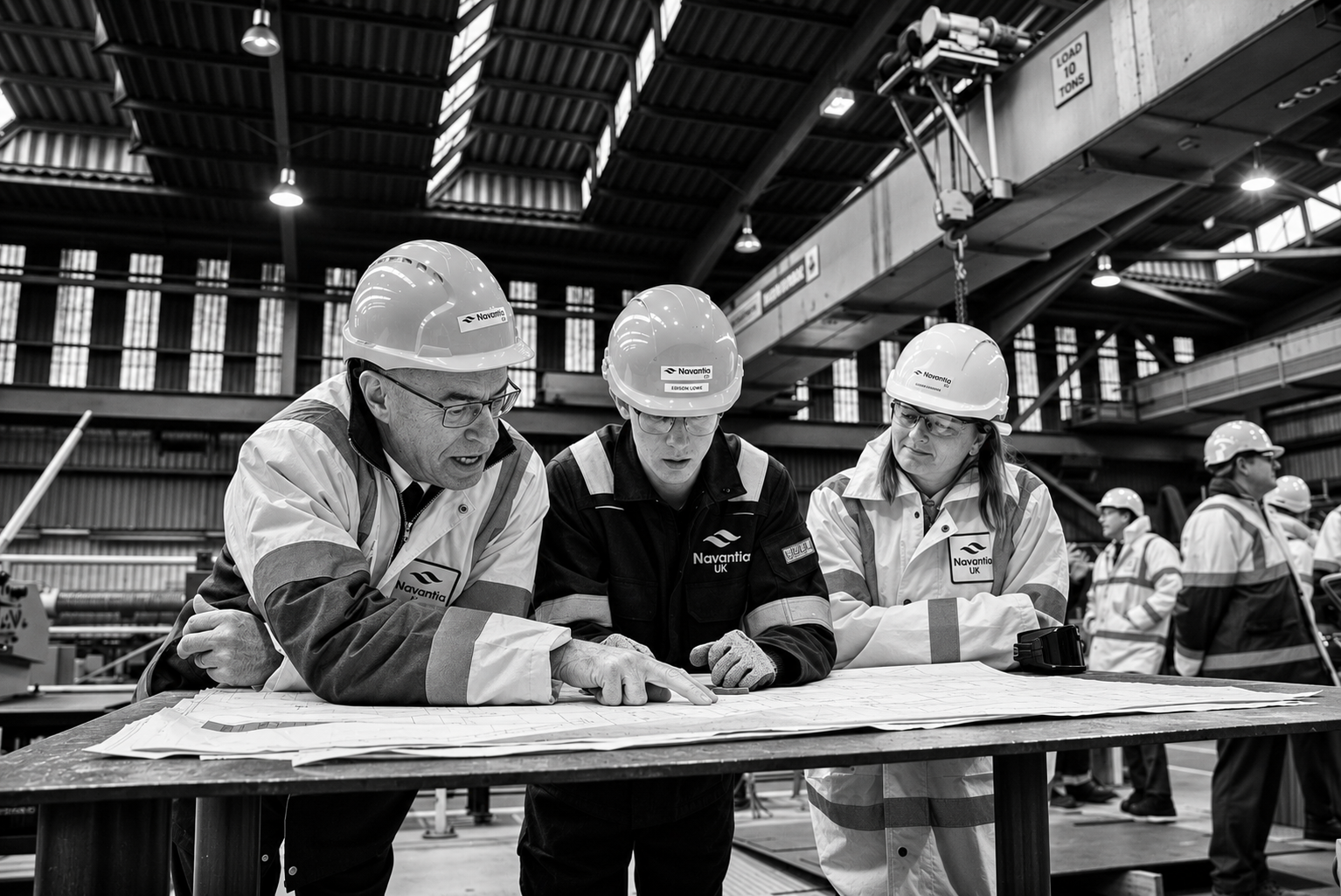
III. Euston: the opportunity beyond FSS
8. Navantia UK has recently made its position on Programme Euston quite clear and intends to make the case to lead the floating dock programme for HM Naval Base Clyde, with Methil and Belfast expected to play particularly important roles. Why does Navantia UK believe these two sites are especially well placed to deliver infrastructure that will support one of the most sensitive elements of Britain’s defence capability?
Derek Jones: Methil and Belfast together offer a strong combination of large-scale fabrication, shipyard infrastructure, maritime access, skilled workforces and modern production capability.
Significant investment has gone into both yards. Methil has proven its ability in 2026 by delivering Seahorse, alongside several vessels to be exported to commercial customers.
Belfast combines exceptional physical scale with the advanced manufacturing capability being developed through FSS – most notably through its newly installed automated panel line.
Those UK capabilities are reinforced by the wider Navantia Group’s experience in naval engineering and the design and delivery of complex maritime infrastructure.
Programme Euston will demand exacting standards of engineering assurance, programme management, quality and security. Navantia UK believes the combination of British industrial capability at Methil and Belfast, backed by established international naval expertise, provides a particularly strong basis from which to compete for the programme. Navantia has experience in delivering similar floating dock infrastructure elsewhere in the world.
9. Programme Euston is also interesting for another reason. FSS gives Navantia UK the opportunity to demonstrate its ability to participate in the construction of major naval vessels; the Clyde docks would require it to demonstrate expertise in strategic naval infrastructure directly connected with Britain’s nuclear submarine force. From an industrial perspective, would securing Euston move Navantia UK into a different category?
Derek Jones: Securing Euston would reinforce the sovereign defence capability that Navantia UK had demonstrated in Britain. It would create jobs and, in particular, it would deliver reindustrialisation for the Levenmouth area around Methil in Scotland.
FSS demonstrates the company’s ability to deliver major naval shipbuilding. Euston would be a logical follow-up programme.
From an industrial perspective, Euston would be another important proof point: evidence that the production, engineering and programme-management capability being established through FSS can be applied to a much broader range of sovereign defence requirements.
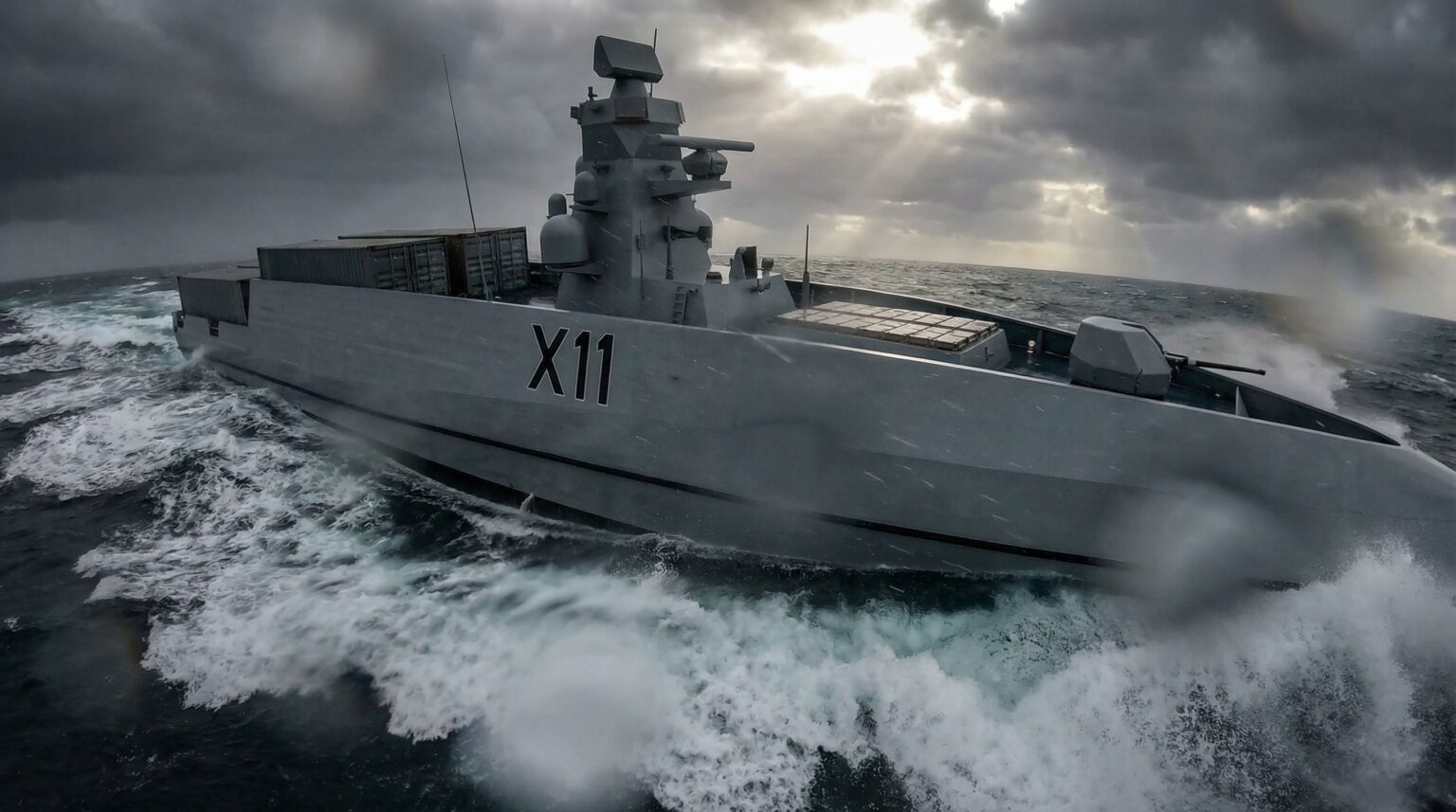
Navantia’s X11 concept, shown cutting through heavy seas in a rendering of the company’s proposed Large Autonomous Surface Vessel (LASV)
10. One of the historic problems faced by British shipbuilding — and indeed by other European shipbuilding industries — has been the recurring cycle of investment, programme completion and the subsequent loss of workload and industrial capability. If Euston were to follow FSS at Methil and Belfast, could it provide precisely the bridge needed to prevent that cycle from being repeated? Or does Navantia UK already intend to compete for further British naval programmes — or indeed programmes beyond the UK?
Derek Jones: Continuity of workload is fundamental. Euston could provide an important next step beyond FSS for Methil and Belfast, But of course, the ambition is to have a steady stream of work, and of contracts.
“Continuity of workload is fundamental.”
Navantia UK is developing Appledore as a specialist centre for autonomous vessels. The group will also be bidding for the Autonomous Transport Ships outlined in the UK’s Defence Investment Plan – a joint project between the UK and Dutch governments.
IV. What does Navantia UK want to become?
11. Navantia UK now has four British shipyards, more than a thousand employees, a major Royal Fleet Auxiliary programme under construction, substantial capital investment and a declared interest in future sovereign defence programmes. Taken together, this increasingly looks less like the UK subsidiary of a Spanish shipbuilder and more like the creation of a permanent British naval industrial player. Is that ultimately the ambition: to reach a point where Navantia UK is no longer perceived as a foreign company operating British shipyards, but simply as one of the companies Britain relies upon to build and sustain its naval power?
Derek Jones: Navantia UK is a British business with British employees, British shipyards and a long-term investment programme in British industrial capability. We also have the enormous advantage of being backed by a naval group with more than 300 years of shipbuilding experience, global engineering expertise and an established portfolio of complex naval programmes. We should regard that combination as a strength.
Success for us would be that, in ten years’ time, Navantia UK will be recognised as one of the companies Britain relies upon to deliver its naval and industrial capability.
My thanks to Derek Jones for taking the time to answer my questions.
Jorge Estévez-Bujez
DYS
Credits: Navantia UK

